The Economics Reset: Why Energy Storage Is Outcompeting Traditional Grid Infrastructure
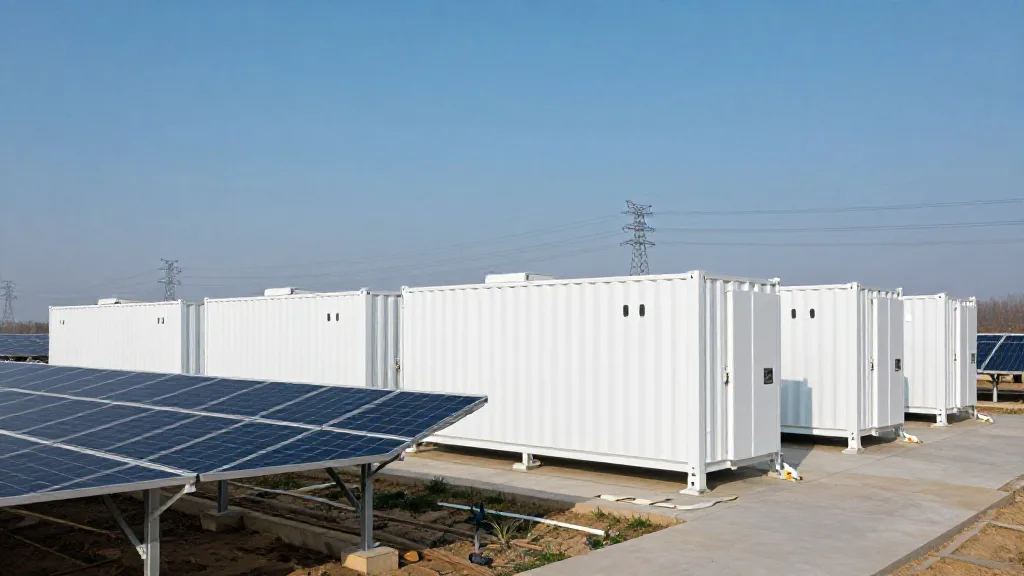
Summary: As global electricity demand surges and renewable penetration deepens, the economic and technical case for energy storage has overtaken traditional grid infrastructure investments. Battery storage costs have fallen by 89% since 2010, while gas peaker plants face rising utilization risk. This article examines the data behind this shift, the performance advantages of storage over conventional assets, and what it means for project developers, utilities, and policymakers. --- ## The Tipping Point Has Already Happened When did energy storage stop being a niche complement to the grid and become the default choice for new capacity? The answer is hiding in plain sight in procurement data. In 2023, global energy storage deployments reached 45 GW, according to BloombergNEF, a figure that doubled year-over-year. Meanwhile, net new natural gas capacity additions in the United States fell to their lowest level in over a decade, according to the U.S. Energy Information Administration. The question is no longer whether storage can replace traditional peaking assets. It is how quickly the remaining fleet of gas turbines and legacy transmission upgrades become stranded investments. The economics have flipped. A 2024 analysis by Lazard found that the levelized cost of storage (LCOS) for a 4-hour lithium-ion system now ranges from $156 to $210 per MWh, competitive with the $150 to $220 per MWh cost of operating a new combined-cycle gas turbine. When factoring in the declining capacity factors of gas plants—due to cheaper renewables flooding the market—the utilization risk makes storage the rational choice for grid planners. --- ## Why Traditional Infrastructure Is Losing the Cost Race
The Data on Declining Battery Costs
The cost trajectory of lithium-ion batteries is the single most important metric in the energy transition. According to the International Energy Agency (IEA), the average cost of a utility-scale lithium-ion battery pack fell to $117/kWh in 2024, down 89% from $1,100/kWh in 2010. This is not a marginal improvement; it is a structural shift that has inverted the cost curve of grid flexibility. For context, a 100 MW / 400 MWh battery system today costs roughly $60 million to $80 million for the storage component alone. A comparable gas peaker plant costs $50 million to $80 million to build, but carries fuel costs of $3 to $6 per MMBtu and emits 400–500 kg of CO2 per MWh. Over a 20-year operational life, the fuel and carbon costs of the gas plant can exceed its capital expenditure by 2–3 times, according to NREL's Annual Technology Baseline. ### The Hidden Costs of Gas Peakers
Traditional peaking plants have a dirty secret: they are designed to run only 5% to 10% of the year, yet their fixed costs must be recovered regardless. This creates a perverse incentive for operators to run them more often, increasing emissions and wearing out equipment. A 2023 study by the Lawrence Berkeley National Laboratory found that gas peakers in California operated at an average capacity factor of just 8%, yet they were responsible for 25% of the state's power sector emissions during peak events. Energy storage flips this model. A 4-hour battery can discharge during the evening ramp, charge during midday solar oversupply, and provide frequency regulation—all without fuel costs, emissions, or mechanical degradation proportional to runtime. The IEA projects that by 2030, battery storage will provide 25% of global short-term flexibility services, up from just 5% in 2020. --- ## Performance Metrics: Storage Wins on Speed and Precision
Ramp Rates and Response Times
Grid operators care about one thing above all: response time. Traditional thermal plants have ramp rates of 2% to 5% of rated capacity per minute. A combined-cycle gas turbine takes 10 to 30 minutes to synchronize and reach full output. A coal plant can take hours. In contrast, modern lithium-ion systems respond in milliseconds. According to the National Renewable Energy Laboratory (NREL), battery storage can provide frequency regulation at 10 to 50 times the speed of conventional generators. This is not just a technical curiosity; it has real market value. In the PJM Interconnection's frequency regulation market, batteries earn 20 to 40 times more per MW than thermal resources because of their precision, a finding confirmed by the Federal Energy Regulatory Commission's Order 841 implementation data. ### Round-Trip Efficiency vs. Thermal Losses
Round-trip efficiency (RTE) is a critical metric often overlooked in the storage vs. traditional debate. Modern lithium-ion systems achieve RTE of 85% to 92%, according to NREL. This means for every 100 MWh charged, 85–92 MWh is delivered back. Compare this to the thermal efficiency of gas peakers, which average 35% to 45% in simple-cycle operation. The gas plant burns three units of fuel to produce one unit of electricity. The battery "burns" electricity that would otherwise be curtailed—often at zero or negative marginal cost during solar oversupply periods. When factoring in curtailment losses, which the IEA estimates reached 250 TWh globally in 2023, the effective "fuel cost" of storage is often negative. --- ## The Transmission Avoidance Argument ### Deferring or Eliminating Grid Upgrades Traditional grid infrastructure—high-voltage transmission lines, substations, and transformers—has a cost problem of its own. The U.S. Department of Energy estimates that $1.3 trillion in transmission investment is needed by 2050 to meet clean energy targets. But transmission projects face 7–10 year permitting timelines and cost overruns of 20%–40%, according to the Lawrence Berkeley National Laboratory. Energy storage offers a distributed alternative. A 10 MW / 40 MWh battery sited at a constrained substation can defer a $15 million transmission upgrade by 3–5 years, according to a 2023 Brattle Group analysis. This "non-wires alternative" approach has been successfully deployed by utilities like Con Edison in New York and Arizona Public Service, achieving 15%–25% cost savings compared to traditional infrastructure projects. ### The Value Stack Multiplier
Traditional infrastructure provides one service: capacity. Energy storage provides a stack of services that can be monetized separately:
- Energy arbitrage (buy low, sell high)
- Frequency regulation (premium market rates)
- Capacity payments (resource adequacy)
- Distribution deferral (avoided transmission costs)
- Resilience (backup power during outages)
A 2024 analysis by the Rocky Mountain Institute found that a single 4-hour battery can stack 3–5 revenue streams, achieving payback periods of 6–9 years—comparable to gas peakers, but without fuel price risk or carbon liabilities. --- ## What This Means for Project Developers and Utilities ### The Shift in Procurement Strategies Utilities are voting with their wallets. According to the U.S. Energy Information Administration, battery storage capacity in the United States grew from 1.5 GW in 2020 to over 20 GW by the end of 2024—a 13-fold increase. Meanwhile, planned gas capacity additions for 2025–2027 have been cut by 40% compared to pre-2020 projections, according to S&P Global Commodity Insights. The message is clear: storage is no longer a pilot project. It is a core grid asset. ### The Role of Hybrid Systems The most efficient configurations now pair storage with renewables at the point of interconnection. The Lawrence Berkeley National Laboratory reports that 45% of all new solar projects in the U.S. interconnection queue include storage co-location. These hybrid systems achieve 10%–20% higher capacity factors than standalone solar, according to NREL, by shifting afternoon generation to evening peak hours. For developers evaluating new capacity, the choice is no longer between storage and gas. It is between storage-plus-renewables and gas-plus-fuel-costs. The former has zero marginal fuel cost, zero emissions, and declining capital costs. The latter has volatile fuel prices, carbon pricing risk, and increasingly stranded asset exposure. --- ## The Path Forward: Practical Considerations
Degradation and Lifespan
Skeptics point to battery degradation as a limitation. Modern LFP (lithium iron phosphate) chemistries, which now account for over 60% of utility-scale deployments according to BloombergNEF, retain 80% of capacity after 6,000–8,000 cycles. At one cycle per day, that is 16–22 years of useful life—comparable to a gas turbine's operational lifespan, without the major overhauls required every 20,000–30,000 operating hours. ### The Bottom Line
The data is unambiguous. Energy storage outperforms traditional grid infrastructure on cost per flexible MW, response time, round-trip efficiency, and environmental impact. The IEA's Net Zero by 2050 roadmap requires 1,400 GW of battery storage by 2030—a 30-fold increase from current levels. The economics now support that trajectory. For utilities, developers, and policymakers, the decision framework has shifted from "whether to deploy storage" to "how fast can we build it." The traditional infrastructure era is not ending because of ideology. It is ending because the numbers no longer work. --- ## DLXN's Role in the Storage Transition
At DLXN Energy, we manufacture solar panels and lithium battery storage systems designed for this new economic reality. Our residential ESS solutions provide homeowners with backup power and arbitrage capability, while our C&I energy storage systems are engineered for commercial facilities seeking to reduce demand charges and increase resilience. For utility-scale applications, our solar solutions integrate storage and generation into a single optimized platform. We also offer the solar sunflower tracker for high-efficiency land use, and our solar technology page details our N-type TOPCon cell architecture, which achieves 22.8% module efficiency—a 6% improvement over conventional PERC cells. The transition from traditional infrastructure to storage-enabled grids is not theoretical. It is happening in every major market, driven by hard data and clear economics. The only question is who will build the infrastructure of the next decade—and on what timeline.