Green Energy for a Low-carbon Tomorrow
Click to skip
The traditional power grid operates on a simple premise: generate electricity at large centralized plants, transmit it over high-voltage lines, and distribute it to end users. This model has served industrialized nations for over a century, but it is showing structural strain. The U.S. Energy Information Administration (EIA) reported that the average U.S. customer experienced 5.5 hours of power interruption in 2022, up from 3.1 hours in 2017. The increase is not incidental — it reflects aging infrastructure, extreme weather events, and a generation mix that is shifting faster than transmission planning can accommodate.
The IEA's World Energy Outlook 2023 notes that global electricity demand is projected to grow by 2.7% annually through 2030, yet grid investment in transmission infrastructure has lagged behind generation investment for the past decade. This mismatch creates congestion, curtailment of renewable generation, and price volatility. For commercial and industrial (C&I) facilities, the cost of downtime is severe. According to a 2023 study by the Lawrence Berkeley National Laboratory, a single grid outage costs the average U.S. commercial facility $12,500 per incident, with industrial facilities facing losses exceeding $50,000 per hour in some sectors.
A microgrid is a localized energy system that can operate independently from the main utility grid — a capability known as islanding. It typically combines distributed generation (solar PV, wind, natural gas generators), energy storage, and intelligent control systems that manage load, generation, and grid interconnection. The defining technical feature is the point of common coupling (PCC), a switch that allows seamless transition between grid-connected and islanded operation.
The economic case for microgrids has strengthened considerably as battery costs have fallen. BloombergNEF's 2023 Energy Storage Price Survey found that the global average price of a lithium-ion battery pack fell to $139/kWh in 2023, down 14% year-over-year and a 90% decline since 2010. This price trajectory makes solar-plus-storage microgrids cost-competitive with grid power in many regions, particularly where electricity rates exceed $0.15/kWh. For facilities with demand charges, a microgrid can shave peak loads and reduce capacity payments, generating operational savings that offset capital expenditure within 5–7 years, according to NREL's 2022 Microgrid Cost Analysis.
Solar photovoltaic (PV) is the preferred generation source in most microgrid designs because of its modularity, declining cost, and zero fuel requirements. The National Renewable Energy Laboratory (NREL) reports that utility-scale solar PV costs have fallen to $0.92/W in 2023, down from $4.80/W in 2010. When paired with lithium-ion storage, a solar microgrid can provide firm capacity during daylight hours and discharge stored energy during evening peaks or grid outages.
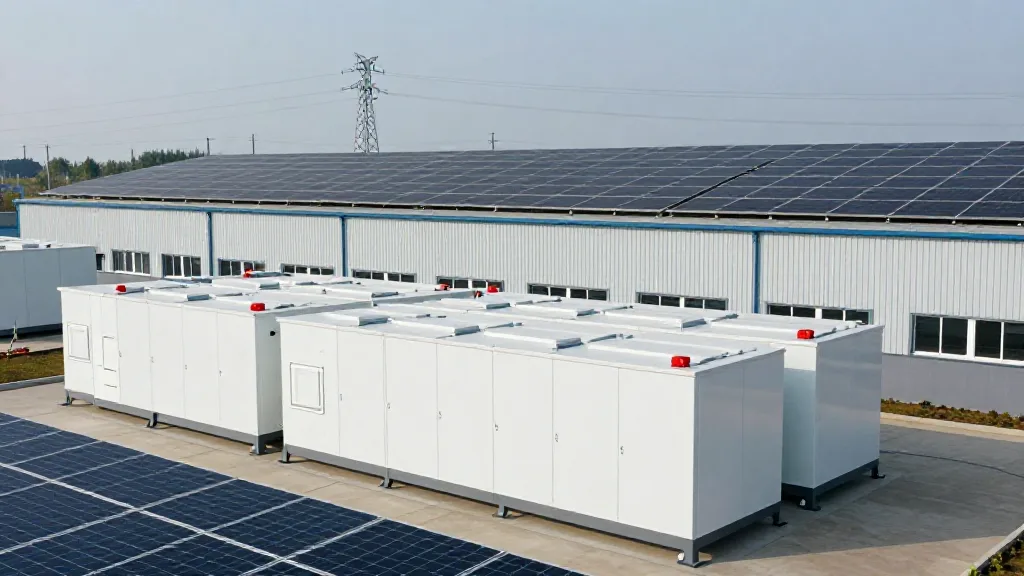
For residential and small commercial applications, integrated solar-plus-storage systems offer the simplest path to microgrid capability. DLXN residential ESS solutions are designed to provide seamless backup power and enable islanded operation without complex switchgear. For larger C&I facilities, modular C&I energy storage systems can be scaled to match load profiles and provide grid services when not islanded.
The levelized cost of energy (LCOE) comparison between microgrids and traditional grid supply depends heavily on location, rate structure, and reliability requirements. For grid-connected customers, the utility remains the lowest-cost supplier for baseline energy — the EIA's 2023 Levelized Cost of Electricity report places the average U.S. grid electricity price at $0.127/kWh for residential and $0.089/kWh for commercial customers. However, this figure excludes the cost of outages, which are externalized to customers.
When reliability is valued, the economics shift. A 2022 analysis by the Rocky Mountain Institute (RMI) found that for a typical mid-sized commercial facility, a solar-plus-storage microgrid has an LCOE of $0.14–$0.18/kWh, including capital amortization and maintenance. While this is higher than grid baseline rates, it becomes economically rational when factoring in the avoided costs of outage losses, demand charges, and price spikes during peak periods. For facilities requiring 99.99% uptime — data centers, hospitals, and manufacturing plants — the microgrid is not a premium option but a necessity.
One of the most significant barriers to microgrid adoption is interconnection — the process of connecting to the utility grid while maintaining islanding capability. The Institute of Electrical and Electronics Engineers (IEEE) Standard 1547 governs interconnection requirements, and recent revisions have streamlined the process for inverter-based resources. However, utility review timelines still average 6–12 months in many jurisdictions, according to a 2023 report by the Interstate Renewable Energy Council (IREC).
Net energy metering (NEM) policies also affect the microgrid business case. In states with favorable NEM policies, excess solar generation can be sold back to the grid, improving payback periods. Conversely, states that have reduced NEM compensation — such as California's transition to NEM 3.0 in April 2023 — make energy storage more valuable, as it allows customers to shift solar generation to evening hours when export rates are low. This regulatory shift is accelerating storage adoption; the California Solar & Storage Association reported that 45% of new residential solar installations in California in Q3 2023 included battery storage, up from 15% in 2022.
The traditional grid was designed for reliability, not resilience. Reliability means maintaining supply under normal conditions; resilience means withstanding and recovering from extreme events. The Federal Energy Regulatory Commission (FERC) reported that weather-related outages cost the U.S. economy between $25 billion and $70 billion annually, yet grid hardening investments have been insufficient to prevent escalating outage frequency.
Microgrids offer a resilience advantage that is difficult to quantify but increasingly valued. A 2022 study by the National Association of State Energy Officials (NASEO) found that for every $1 invested in distributed solar and storage, communities avoided $2–$3 in outage-related losses over a 10-year period. This ratio improves in regions prone to hurricanes, wildfires, and extreme cold — the same regions where grid outages are most frequent.
For commercial operators, resilience translates directly to revenue protection. A microgrid can maintain operations during a multi-day outage, preserving perishable inventory, maintaining production schedules, and protecting data infrastructure. The ability to integrate solar panels with battery storage in a coordinated system provides this resilience while also reducing operational energy costs during normal operation.
The binary framing of microgrids versus traditional grids is increasingly obsolete. The emerging paradigm is a hybrid system in which microgrids operate as grid-connected assets that can island when necessary. This approach — sometimes called a "grid-interactive microgrid" — provides the reliability benefits of distributed energy while maintaining the economic advantages of grid connection for baseline supply.
The U.S. Department of Energy's Office of Electricity reports that there are currently over 700 operational microgrids in the United States, with a combined capacity exceeding 10.5 GW. The majority are in commercial, institutional, and military applications, but residential adoption is accelerating as solar-plus-storage systems become more accessible. DLXN offers integrated solar solutions that bridge the gap between simple grid-tied systems and full islanding capability, allowing customers to upgrade progressively as their resilience needs evolve.
Proper microgrid design begins with a detailed load analysis. NREL's REopt optimization model is the industry standard for sizing solar, storage, and backup generation to meet specific resilience and economic objectives. Key inputs include hourly load profiles, local solar irradiance data, utility rate structures, and outage probability models. For most facilities, the optimal storage capacity is 2–4 hours of critical load, as this covers the majority of outage durations while minimizing capital cost.
Microgrid controllers must manage voltage and frequency within IEEE 1547 tolerances during islanded operation. This requires inverters with grid-forming capabilities — a technology that has advanced significantly in recent years. Modern DLXN solar technology incorporates advanced grid-forming inverters that can transition between grid-connected and islanded modes in less than 100 milliseconds, minimizing disruption to sensitive loads.
A microgrid is only as reliable as its control system. SCADA (Supervisory Control and Data Acquisition) systems, coupled with modern IoT sensors, provide real-time monitoring of generation, storage, and load. Cloud-based monitoring platforms enable remote management and predictive maintenance, reducing operational costs by an estimated 20–30% according to a 2023 report by Wood Mackenzie.
The microgrid market is poised for significant growth. BloombergNEF projects that global microgrid capacity will reach 20 GW by 2030, driven by declining battery costs, federal tax incentives under the Inflation Reduction Act (IRA), and state-level resilience programs. The IRA provides a 30% investment tax credit (ITC) for solar-plus-storage systems, with additional bonuses for domestic content and low-income community projects. These incentives can reduce the payback period for commercial microgrids to 4–6 years in favorable jurisdictions.
Federal funding is also accelerating research and deployment. The DOE's Grid Resilience and Innovation Partnerships program allocated $10.5 billion in 2023 for grid modernization projects, including microgrid deployments in underserved communities. This represents a recognition that distributed energy resources are not just a niche solution but a core component of future grid architecture.
The evidence suggests that microgrids and traditional grids are not mutually exclusive but complementary components of a more resilient energy system. The traditional grid remains the most cost-effective means of delivering baseline electricity to dense urban areas, while microgrids provide targeted reliability and resilience for critical facilities and remote communities. The optimal strategy for most organizations is a hybrid approach: maintain grid connection for cost-effective baseline supply, while deploying solar-plus-storage to provide backup power, reduce demand charges, and generate renewable energy.
As battery costs continue their downward trajectory — BloombergNEF projects $100/kWh by 2026 — the economic barrier to microgrid adoption will continue to fall. The organizations that act now, deploying residential ESS systems or C&I storage solutions, will be positioned to capture both the economic and resilience benefits of distributed energy. The grid of the future will not be a single, monolithic system but an interconnected network of microgrids, anchored by the traditional utility infrastructure and enriched by distributed generation.
Latest from DLXN Energy