Lithium Battery Market Trends: 2025 Price Dynamics Reshape the Global Energy Storage Landscape
DLXN Energy Editorial Team
Green Energy for a Low-carbon Tomorrow
Click to skip
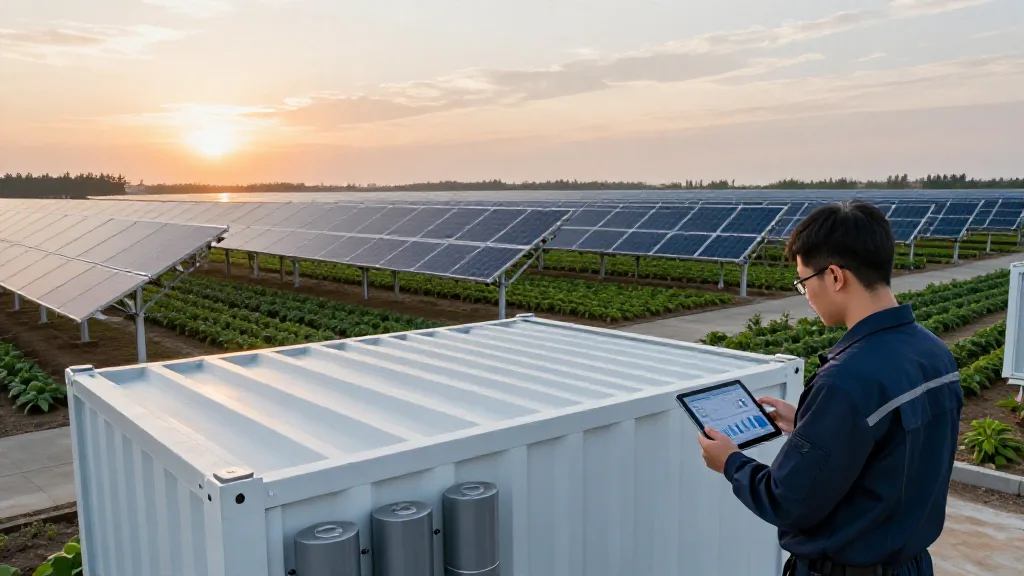
The lithium battery market has entered a new phase of price discovery. According to BloombergNEF's 2024 Battery Price Survey, the volume-weighted average price for lithium-ion battery packs fell to $115/kWh in 2024, a 20% decline year-over-year. More striking, spot prices in China have already breached the $100/kWh threshold for LFP (lithium iron phosphate) cells in early 2025, with some tier-1 suppliers quoting $75–85/kWh for bulk orders. This represents a 73% reduction from the $280/kWh average recorded in 2018 by the same source.
The implications for solar project economics are substantial. When battery storage costs drop below $100/kWh, the levelized cost of storage (LCOS) for 4-hour duration systems falls to approximately $0.10–0.15/kWh, according to the U.S. National Renewable Energy Laboratory's 2024 Storage Futures Study. At these levels, solar-plus-storage becomes competitive with natural gas peaker plants in most U.S. markets, even without federal tax credits. The NREL analysis projects that by 2030, 80% of new U.S. generation capacity could be solar paired with storage under current cost trajectories.
The primary driver of this price collapse is a structural oversupply in cell manufacturing capacity. The International Energy Agency's "Batteries and Secure Energy Transitions" report (2024) documents that global battery manufacturing capacity reached 2,200 GWh in 2023, while actual production was only 1,200 GWh—a utilization rate of just 55%. Chinese manufacturers alone account for 80% of this capacity, according to the same IEA analysis, and they are aggressively cutting prices to maintain market share.
Lithium carbonate prices tell a similar story. After peaking at CNY 600,000/tonne in November 2022, prices collapsed to approximately CNY 90,000/tonne by February 2024, according to data from the Shanghai Metals Market. This 85% decline in the core raw material has cascaded through the supply chain, allowing battery makers to pass savings to customers while still maintaining margins. Cobalt prices have fallen 65% from their 2022 peak, and nickel is down 45% over the same period, further reducing cathode material costs.
Beyond raw material savings, manufacturing efficiency gains continue to push costs lower. The U.S. Department of Energy's Vehicle Technologies Office reports that battery pack energy density has improved from 150 Wh/kg in 2015 to over 270 Wh/kg in current production cells, enabling more energy per dollar of material input. Meanwhile, dry electrode coating and cell-to-pack architectures have reduced manufacturing complexity, cutting capital expenditure per GWh by 35% between 2020 and 2024, according to the DOE.
The shift toward LFP chemistry has been particularly consequential. LFP cells now account for 60% of global battery production, up from 25% in 2021, according to the IEA's Global EV Outlook 2024. LFP's lower material cost, longer cycle life (6,000+ cycles versus 3,000–4,000 for NMC), and improved thermal stability make it ideally suited for stationary storage applications. For solar installers evaluating storage options, the cost and performance characteristics of modern lithium iron phosphate systems—such as those offered by DLXN in their lithium battery storage product line—now offer compelling payback periods of 5–7 years in most U.S. markets.
The price declines are translating directly into record deployment numbers. The U.S. Energy Information Administration reports that utility-scale battery storage capacity reached 15.4 GW by the end of 2023, with an additional 10 GW expected online in 2024 alone. The EIA's Short-Term Energy Outlook projects U.S. storage capacity will double again by the end of 2025, reaching approximately 30 GW. At the global level, the IEA estimates that energy storage deployments reached 90 GW in 2023, with projections of 230 GW by 2027—a compound annual growth rate of 26%.
This growth is creating new opportunities for integrated solar-plus-storage solutions. For commercial and industrial facilities, the combination of solar generation with battery storage can reduce demand charges by 30–50% while providing backup power capabilities. DLXN's C&I energy storage systems are designed to capitalize on these economics, offering modular configurations from 100 kWh to 10 MWh that can be scaled to match facility load profiles.
Residential battery prices have fallen more slowly than grid-scale systems—the smaller volumes and higher balance-of-system costs per kWh keep prices approximately 30–40% higher than utility-scale equivalents, according to the SEIA/GTM Research U.S. Energy Storage Monitor. However, the trend is unmistakable. The average installed cost for residential batteries in the U.S. fell from $1,200/kWh in 2020 to approximately $850/kWh by Q3 2024, according to the same source. In markets with high electricity rates or favorable net metering policies, residential solar-plus-storage now achieves payback in 8–10 years.
The rapid cost declines have also enabled new business models. Virtual power plants (VPPs), where distributed home batteries are aggregated to provide grid services, are emerging in California, Texas, and Hawaii. The California Public Utilities Commission's VPP rulemaking in 2024 established compensation mechanisms that can add $200–500 per year in additional revenue for participating homeowners, according to the CPUC's published decision. For homeowners considering solar installations, pairing panels with a residential ESS creates the flexibility to participate in these programs while providing resilience during grid outages.
Despite the favorable price environment, significant risks remain. The IEA notes that 80% of battery manufacturing capacity is concentrated in China, creating supply chain vulnerabilities that have prompted policy responses. The U.S. Inflation Reduction Act's Section 45X production tax credits provide $35/kWh for domestically manufactured battery cells and $10/kWh for modules, creating strong incentives for U.S. manufacturing. According to the U.S. Department of Energy, announced U.S. battery manufacturing capacity has grown from 20 GWh in 2020 to over 400 GWh by 2025, though only a fraction of this is currently operational.
Additionally, the Section 301 tariffs on Chinese-made batteries (25% for batteries, 7.5% for components) are scheduled to increase in 2026, potentially raising costs for import-dependent projects. However, the DOE's Loan Programs Office has committed $15 billion to battery manufacturing projects across the U.S., which should help domestic production scale sufficiently to meet projected demand without relying on tariffed imports.
The trajectory is clear: battery costs will continue to decline, though at a decelerating rate. BloombergNEF projects pack prices will reach $80/kWh by 2027 and potentially $60/kWh by 2030 as sodium-ion and solid-state technologies begin commercial deployment. These advances will make solar-plus-storage the default choice for new generation capacity in most global markets.
For project developers and EPC firms, the current market environment offers a unique opportunity to lock in favorable battery pricing. The combination of oversupply, falling material costs, and technology improvements has created a buyer's market that may not persist indefinitely as manufacturing consolidation occurs and trade policies evolve. Evaluating storage options from established manufacturers with proven track records—whether for utility-scale projects or distributed applications—will be critical to capturing the full value of these market conditions.
Latest from DLXN Energy