Large-Scale Commercial Energy Storage: Market Trends Reshaping the Grid in 2025
The Storage Boom: Numbers That Define the Market What happens when the world's
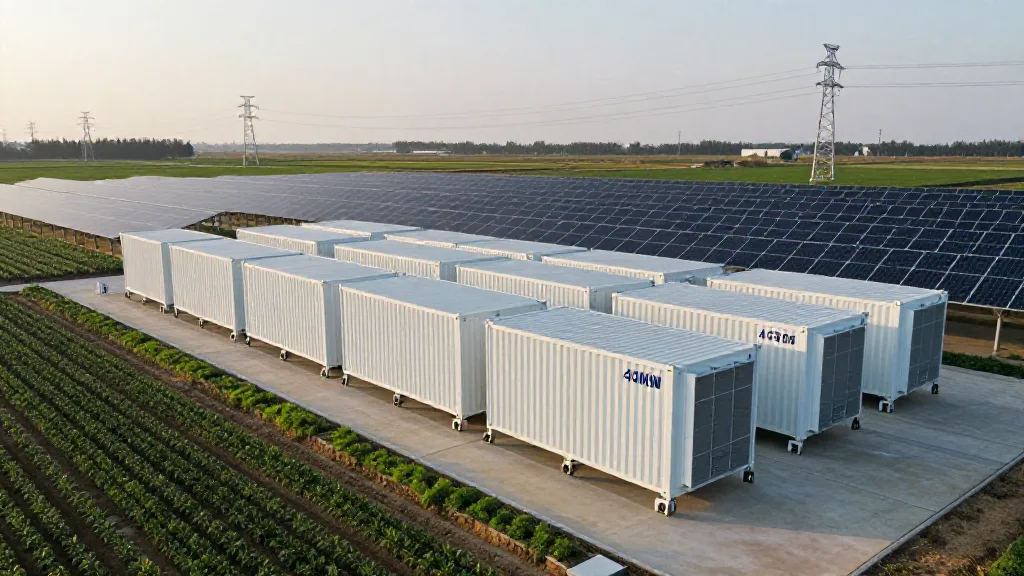
fastest-growing electricity source meets its most essential complement? The answer is playing out in utility-scale battery projects across every major economy. According to the International Energy Agency (IEA), global battery energy storage installations reached 42 GW in 2023, and the agency projects this figure will exceed 120 GW annually by 2030—a compound annual growth rate of approximately 16%. The economics have shifted decisively: lithium-ion battery pack prices fell to an average of $115/kWh in 2024, down from $780/kWh in 2013, based on BloombergNEF data. At these price points, commercial storage projects now deliver payback periods under six years in most deregulated markets. For developers evaluating solar solutions that pair generation with storage, the market signals are unambiguous. The United States alone deployed 8. 7 GW of new storage capacity in Q3 2024, according to the American Clean Power Association, with the commercial and industrial (C&I) segment representing 28% of that total. This is not a cyclical uptick; it is a structural shift in how electricity is procured, priced, and delivered.
Technology Trends: Beyond the Lithium Plateau
Duration Extension and Chemistry Diversification The most significant technical
trend is the extension of discharge duration from the standard 2–4 hours toward 6–8 hour systems. The U. S. Energy Information Administration reports that 45% of new storage capacity announced in 2024 specifies durations exceeding 6 hours, driven by shifting peak load profiles and diminishing solar output windows in the evening. This trend favors system architectures that can scale battery capacity without proportional increases in power electronics costs. While lithium iron phosphate (LFP) remains the dominant chemistry—accounting for 68% of utility-scale deployments per S&P Global Commodity Insights—alternative chemistries are gaining traction. Sodium-ion batteries, which use abundant materials and operate effectively across wider temperature ranges, are entering commercial production at scale. Several Chinese manufacturers have announced sodium-ion production lines exceeding 10 GWh annual capacity, targeting C&I applications where cycle life and temperature resilience matter more than raw energy density.
System Integration and Smart Controls Modern storage installations are no longer
standalone assets. The integration of AI-driven energy management systems allows commercial operators to optimize dispatch decisions in real time, responding to wholesale price signals, grid congestion alerts, and on-site load variations. The National Renewable Energy Laboratory (NREL) projects that advanced controls can improve storage project revenues by 15–25% through multi-service stacking—simultaneously providing frequency regulation, capacity firming, and demand charge reduction. For commercial facilities, this means the C&I energy storage segment is evolving beyond simple peak shaving. Modern systems participate in ancillary service markets, provide backup power during outages, and enable EV fleet charging without expensive grid upgrades. The business case has shifted from cost avoidance to revenue generation.
Policy Drivers and Market Design Evolution
FERC Orders and Wholesale Market Access Regulatory changes are accelerating
storage adoption. FERC Order 841, implemented in 2020, required regional grid operators to allow storage resources to participate in wholesale capacity, energy, and ancillary service markets. The impact has been substantial: Lawrence Berkeley National Laboratory analysis shows that storage resources in CAISO and ERCOT now capture 60–70% of their potential revenue from ancillary services, with the remainder from energy arbitrage. More recently, the Inflation Reduction Act's Investment Tax Credit provisions—which provide a 30% credit for standalone storage projects—have removed a critical barrier. The Solar Energy Industries Association reports that storage project pipeline in the U. S. grew by 38% in the year following the IRA's passage, with C&I projects particularly benefiting from the direct pay provision that allows tax-exempt entities to monetize credits.
Global Market Divergence Market development varies by region. Europe's storage
market grew 42% in 2024, according to SolarPower Europe, driven by the REPowerEU framework and negative wholesale prices that make storage economically essential. Germany leads with 1. 5 GW of large-scale storage, while Italy and Spain are emerging as high-growth markets. In Asia, China added 21. 5 GW of new storage capacity in 2023 alone, per China Energy Storage Alliance, targeting 100 GW cumulative capacity by 2027.
Project Economics: What the Numbers Reveal
Levelized Cost of Storage The levelized cost of storage (LCOS) for commercial
applications has fallen below $150/MWh for 4-hour systems in favorable markets, according to Lazard's Levelized Cost of Storage Analysis. This compares favorably to peaker plant costs of $180–$250/MWh, making storage the economically rational choice for capacity needs. The cost breakdown is instructive: battery cells represent 42% of system costs, power electronics 18%, and balance-of-system (civil works, integration, commissioning) 40%.
Revenue Stacking in Practice A typical 10 MW/40 MWh C&I installation in ERCOT
generates revenue across four streams:
- Energy arbitrage: $25–35/MWh per cycle
- Ancillary services (regulation up/down): $15–25/MWh
- Capacity payments: $8–12/kW-month
- Demand charge reduction: $10–20/kW-month The Electric Reliability Council of Texas reports that storage resources captured average revenues of $62/kW-month in summer 2024, driven by extreme price volatility. This multi-stream revenue model explains why private equity and infrastructure funds have committed over $40 billion to storage projects since 2022, per Mercom Capital Group data.
Implementation Considerations for Commercial Buyers
System Design and Scalability For commercial and industrial facilities
evaluating storage investments, the critical design parameters extend beyond capacity and duration. Thermal management—particularly for installations in hot climates— impacts cycle life and round-trip efficiency. Modern liquid-cooled systems achieve round-trip efficiencies of 88–92%, compared to 84–87% for air-cooled designs, according to testing by DNV GL. Modular system architecture offers significant advantages for phased deployment. A facility can install 2 MWh initially, then scale to 10 MWh as load profiles evolve or as additional revenue streams become accessible. This approach reduces upfront capital requirements while preserving the option for future expansion. For facilities requiring reliable backup power alongside economic optimization, integrated lithium battery storage systems with seamless grid-to-off-grid transition capabilities are increasingly the standard specification.
Safety and Standards Compliance The storage industry has matured its safety
protocols substantially. The adoption of NFPA 855 standards, UL 9540A testing requirements, and improved battery management systems has reduced thermal runaway incidents by 60% since 2020, per EPRI incident tracking data. Commercial buyers should verify that systems comply with current codes and that manufacturers provide comprehensive warranty coverage—typically 10 years for battery capacity retention at 80%.
The Road Ahead The trajectory is clear: large-scale commercial energy storage is
transitioning from an emerging technology to a grid fundamental. The International Renewable Energy Agency projects that global storage capacity must reach 360 GW by 2030 to align with Paris Agreement targets—roughly nine times current installed capacity. This scale of deployment will require continued cost reduction, streamlined interconnection processes, and workforce development across the value chain. For commercial energy managers and project developers, the current market conditions represent a compelling opportunity. Battery prices continue to decline, regulatory frameworks are increasingly favorable, and revenue opportunities are expanding across wholesale markets and behind-the-meter applications. The companies that act now to deploy storage capacity will benefit from both immediate economic returns and strategic positioning in an increasingly electrified, renewable-powered grid. The technology has reached maturity. The economics are compelling. The regulatory barriers are falling. What remains is execution—and the window for early-mover advantage is open now.