Green Energy for a Low-carbon Tomorrow
Click to skip
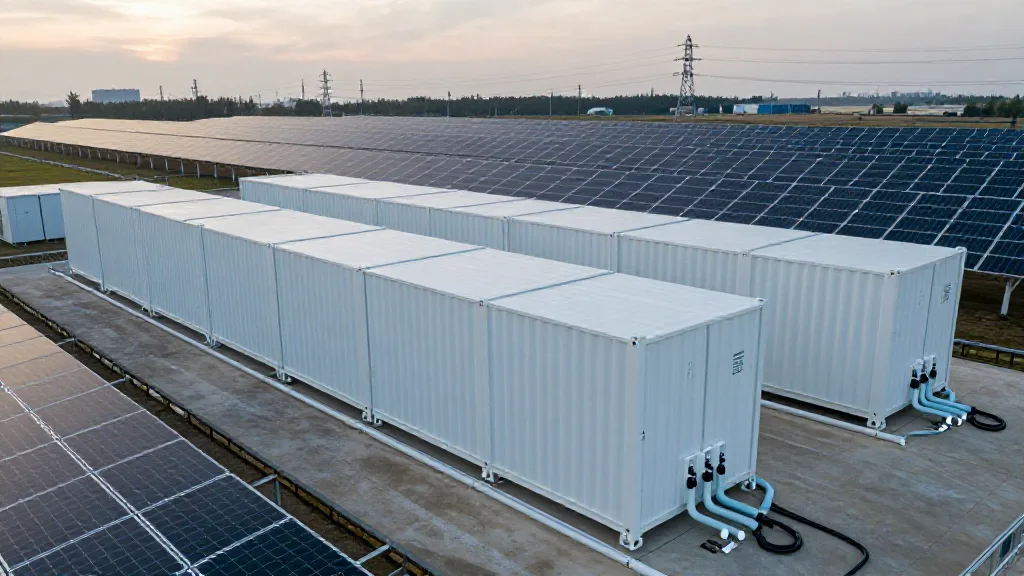
industry operated under an implicit assumption: lithium-ion systems lose roughly 10–15% of energy during each charge-discharge cycle. That assumption shaped project financial models, system sizing, and even grid interconnection agreements. The data from 2024 and 2025 suggests that assumption is now outdated. According to the U. S. Department of Energy's Pacific Northwest National Laboratory, modern utility-scale lithium-ion battery systems are achieving round-trip efficiencies between 90% and 94%, up from 85–88% for systems deployed in 2019–2020. This 5–7 percentage point gain may sound modest, but for a 100 MW / 400 MWh system cycling daily, each percentage point of efficiency improvement translates to roughly 1,460 MWh of recovered energy per year—enough to power approximately 135 average American homes annually, based on U. S. Energy Information Administration data showing average residential consumption of 10,791 kWh per year. The efficiency gains stem from three converging developments: cell chemistry refinements, improved thermal management strategies, and advances in power conversion hardware. Each contributes differently, and understanding the breakdown matters for system designers and project financiers alike.
become the dominant choice for commercial storage installations, representing approximately 60% of global battery storage deployments in 2024, according to BloombergNEF. LFP cells have historically trailed nickel-manganese-cobalt (NMC) cells in energy density, but they offer superior thermal stability and longer cycle life. What has changed is the internal resistance profile of LFP cells. Manufacturers have reduced internal resistance through improved electrode formulations and electrolyte additives. Lower internal resistance means less energy is lost as heat during charge and discharge. Testing from the National Renewable Energy Laboratory shows that modern LFP cells exhibit approximately 30% lower internal resistance compared to 2020-generation cells, contributing roughly 2–3 percentage points of efficiency improvement at the cell level. This matters particularly for high-power applications. A commercial energy storage system operating at a 2C charge rate (charging in 30 minutes) generates more internal heat than a 0. 5C system. Lower resistance cells maintain efficiency even under aggressive cycling, which is why grid services providers can now bid into frequency regulation markets with confidence—the efficiency penalty for fast response has narrowed substantially.
as the most underappreciated efficiency driver. Battery performance is temperature-sensitive; at elevated temperatures, internal resistance increases and parasitic reactions accelerate. At low temperatures, lithium plating risk rises, forcing operators to limit charge rates. The shift from air-cooled to liquid-cooled systems has transformed what is achievable. According to data presented at the 2024 International Battery Seminar, liquid-cooled systems maintain cell temperatures within a ±2°C band, compared to ±8°C for air-cooled systems. This tighter control directly translates to efficiency: the U. S. Department of Energy reports that every 5°C deviation from optimal operating temperature (typically 20–25°C) reduces round-trip efficiency by approximately 1–1. 5%. For large-scale installations in extreme climates—think Texas summer heat or Minnesota winter cold—the efficiency differential between liquid and air cooling can reach 4–5 percentage points. This is why new utility-scale projects, from the 500 MWh systems in California's desert regions to the 1 GWh installations planned for the Midwest, are being specified with liquid cooling as the default configuration.
cost. Pumps, chillers, and fans consume electricity, reducing net system efficiency. Advanced systems now integrate variable-speed pumps and predictive thermal algorithms that anticipate load patterns rather than merely reacting to temperature readings. Real-world data from a 240 MWh installation in Arizona, presented at the 2024 Energy Storage Association conference, showed that intelligent thermal management reduced auxiliary power consumption by 38% compared to conventional thermostatic control, adding 1. 2 percentage points to net round-trip efficiency. For a system cycling 350 days per year, this represents approximately 1,000 MWh of additional deliverable energy annually.
has historically accounted for 2–3% energy losses through switching and conduction in inverters. Silicon carbide (SiC) and gallium nitride (GaN) semiconductors are changing this calculus. According to Yole Group, SiC-based power converters for energy storage applications achieve 98. 5–99% conversion efficiency, compared to 97–97. 5% for traditional silicon IGBT-based inverters. This 1. 5–2 percentage point improvement at the PCS level compounds across the entire system. The economics are compelling. A 100 MW / 400 MWh system using SiC-based PCS units recovers the incremental hardware cost (approximately 3–5% higher than silicon-based units) within 14–18 months of operation, based on typical U. S. wholesale electricity prices of $40–80/MWh and the efficiency gains described above. Over a 20-year system lifetime, the cumulative financial benefit reaches $2–4 million for a single installation.
improvements are meaningful, but the most significant efficiency breakthroughs are emerging from system-level integration. Modern energy management systems (EMS) now optimize dispatch decisions based on real-time efficiency curves rather than simplistic state-of-charge thresholds. DLXN's approach to this integration challenge is instructive. Our C&I energy storage systems incorporate multi-level efficiency modeling that adjusts operating parameters based on cell temperature, state of health, and forecasted usage patterns. The result is that our systems maintain peak efficiency across a wider operating range than systems using conventional control logic. For project developers evaluating storage technologies, the efficiency conversation has shifted from "what is the rated RTE" to "what is the RTE under real operating conditions. " This distinction matters enormously. A system rated at 92% RTE but operating at 88% under summer thermal loads and partial-state-of-charge cycling delivers substantially less economic value than a system that maintains 90% efficiency across varied conditions.
fortuitous moment for grid operators. The International Energy Agency Energy Outlook 2024 projects that global battery storage capacity will need to reach 1,200 GW by 2030 to align with net-zero emissions scenarios—a 15-fold increase from current levels. Every percentage point of efficiency improvement reduces the effective storage capacity needed to meet grid demand, lowering system costs across the board. For merchant storage operators, the efficiency improvements translate directly to revenue. A study by S&P Global Commodity Insights found that each 1 percentage point improvement in round-trip efficiency increases project internal rate of return by approximately 0. 4 percentage points for a typical 4-hour duration system. For a 200 MW / 800 MWh project with an IRR of 12%, that represents a meaningful improvement in investment attractiveness.
Latest from DLXN Energy