Large-Scale Commercial Energy Storage Installation: A Field Guide for 2025
The Storage Boom: Size and Trajectory The global energy storage market added
approximately 45 GW of new capacity in 2024, according to BloombergNEF, with the C&I segment accounting for nearly 30% of that figure. This trajectory is not accidental. Lithium-ion battery pack prices fell to $115/kWh in 2024, down 20% year-over-year, making storage financially viable for a broader range of commercial applications. For project developers, the math is straightforward: a 5 MW / 20 MWh system at $115/kWh translates to roughly $2. 3 million in battery hardware alone. When you factor in power conversion systems, balance-of-plant, and installation labor, the fully installed cost typically lands between $350 and $450 per kWh for systems above 10 MWh, per NREL's 2024 Annual Technology Baseline. These figures matter because they define the payback period—typically 6 to 9 years for demand-charge reduction applications in the United States, according to SEIA's quarterly market reports.
Site Assessment: Physical and Electrical Constraints
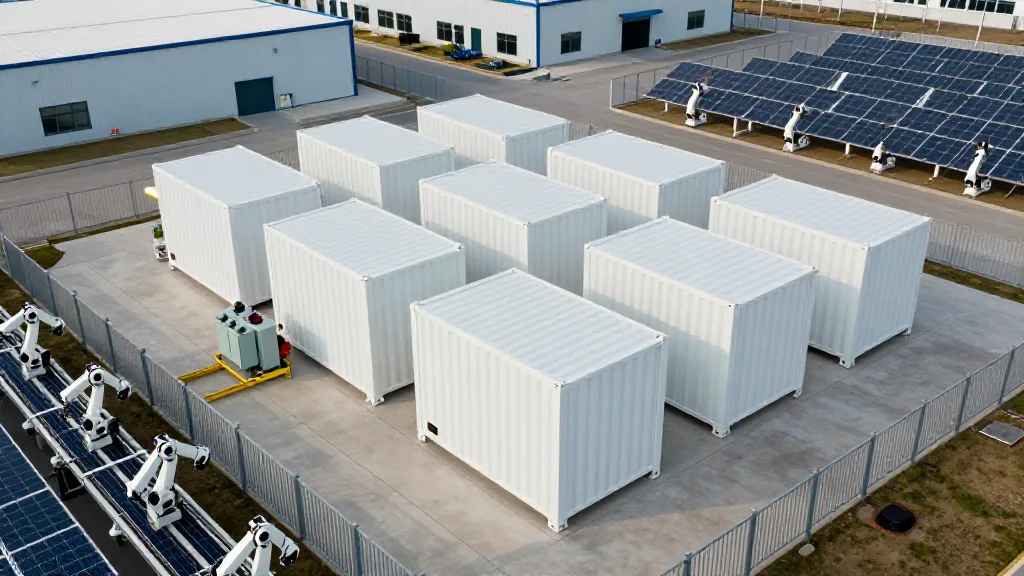
Space and Layout Planning A 20-foot containerized battery system occupies
roughly 320 square feet. For a 10 MWh installation, plan for 4 to 6 containers plus 2 to 3 inverter skids, requiring 3,000 to 5,000 square feet of clear space. That footprint excludes required fire safety setbacks, which vary by jurisdiction—the International Fire Code (IFC) 2024 edition mandates a minimum 10-foot separation between containerized units unless fire-rated walls are installed. Critical site factors include: - Floor loading: Battery containers weigh 35,000–45,000 lbs when fully populated. Confirm slab or compacted gravel ratings with a structural engineer. - Thermal management: Outdoor installations in climates exceeding 40°C (104°F) require derating of battery capacity by 10–15% unless liquid cooling is specified. NREL's Storage Futures Study projects that thermal derating will become a primary performance variable as installations expand into hotter regions. - Access: Crane access for container placement, plus a 12-foot aisle clearance for fire department response, per NFPA 855.
Grid Interconnection and Transformer Capacity The single most common project
delay is utility interconnection. For a 5 MW system, the utility typically requires a 12. 47 kV or 13. 8 kV medium-voltage connection, which means a step-up transformer rated at 5. 5 MVA or higher. Lead times for pad-mounted transformers have stretched to 70–90 weeks in some U. S. regions, according to Wood Mackenzie's supply chain tracker. Order transformers at the start of the project, not after permitting.
System Design: Architecture and Component Selection
AC-Coupled vs. DC-Coupled Topologies For retrofit projects—adding storage to an
existing solar array—DC-coupled systems achieve 3–5% higher round-trip efficiency by avoiding double inversion. However, AC-coupled systems offer greater flexibility for standalone storage or hybrid configurations. The choice hinges on whether you're pairing with new solar or retrofitting. For new builds, DC-coupling with a 1500V architecture is now the industry standard. This reduces DC cabling costs by approximately 15% and improves power density, per IRENA's Electricity Storage Valuation report. The trade-off: 1500V systems require more rigorous arc-flash protection and qualified maintenance personnel.
Battery Chemistry Selection Lithium iron phosphate (LFP) now commands 70% of the
C&I storage market, according to BloombergNEF's 2024 Energy Storage Outlook, up from 40% in 2021. LFP's advantages are documented: 6,000–8,000 cycle life at 80% depth of discharge, thermal runaway onset at 270°C (vs. 150°C for NMC), and zero cobalt content. For a 20-year project lifetime, LFP systems deliver 15–20% lower levelized cost of storage compared to nickel-manganese-cobalt (NMC) chemistries, even at higher upfront costs.
Power Conversion and Controls The inverter/PCS is the most failure-prone
component in storage systems, with field failure rates of 2–3% annually in the first five years, per EPRI's storage reliability data. Specify PCS units with: - Grid-forming capability: Essential for black-start and microgrid applications - Reactive power support: At least ±0. 9 power factor capability for utility compliance
- Sealed enclosures: IP54 minimum for outdoor installations
Safety, Codes, and Compliance
NFPA 855 and UL 9540A NFPA 855 (2024 edition) establishes the baseline for
energy storage safety in the U. S. Key requirements include: - Maximum system size of 50 kWh per unit within a building unless separated by fire-rated assemblies - Smoke detection and exhaust ventilation for indoor installations - Deflagration venting per NFPA 68 for outdoor containers UL 9540A testing validates fire propagation characteristics. Systems that pass this testing—meaning thermal runaway does not propagate to adjacent units—can reduce required setbacks by up to 50%, according to the National Fire Protection Association's guidance. This directly impacts project cost: a 40-foot setback reduction on a 200-foot-long container row saves roughly 8,000 square feet of land.
Thermal Runaway and Gas Detection Modern systems integrate multi-layer gas
detection (CO, H₂, and VOC sensors) with active ventilation. The response sequence should be: detect gas → isolate the affected rack → trigger exhaust fans → alert facility management. This sequence must be tested quarterly, not annually, per NFPA 855's maintenance requirements.
Financial Modeling and Revenue Streams
Stacking Value Streams A well-designed C&I storage system can stack multiple
revenue streams: 1. Demand charge reduction: $8–15 per kW-month in many U. S. utility territories
2. Energy arbitrage: $0. 05–0. 15 per kWh spread between peak and off-peak rates 3. Frequency regulation: $30–60 per MW-hour in PJM and ERCOT markets
4. Solar self-consumption: Increases solar PV utilization by 20–30% when paired The Lawrence Berkeley National Laboratory's tracking database shows that storage-plus-solar hybrid plants achieve 15–25% higher revenue than standalone solar in wholesale markets, primarily through time-shifting generation to peak price periods.
Incentive Programs The U. S. Investment Tax Credit (ITC) provides a 30% credit
for storage systems charged by solar at least 75% of the time. Under the Inflation Reduction Act's "energy community" provisions, an additional 10% adder applies in qualifying areas. These incentives reduce the effective cost of a 20 MWh system from $7 million to approximately $4. 2 million—a critical threshold for project viability.
Installation Best Practices
Commissioning Sequence A proper commissioning process spans 4–6 weeks for
multi-megawatt systems: 1. Static testing: Verify all connections, torque checks, and insulation resistance
2. Functional testing: Exercise each protection relay and communication path
3. Performance validation: Measure round-trip efficiency at 25%, 50%, and 100% rated power 4. Grid interconnection testing: Verify synchronization and voltage regulation
Ongoing Maintenance Annual maintenance costs typically run 1–2% of installed
system cost. Key activities include: - Quarterly thermal imaging of battery modules and connections
- Annual capacity test to verify state-of-health (expect 2–3% degradation per year for LFP)
- Calibration of gas sensors and thermal sensors every 12 months For organizations managing multiple sites, centralized monitoring platforms that track state-of-charge, temperature distribution, and cycle counts are essential. DLXN's solar solutions include integrated monitoring dashboards that consolidate fleet-level data, reducing operational overhead by up to 30% compared to site-by-site management.
The Path Forward The C&I storage market is maturing rapidly. Standardized
containerized solutions, like those offered in DLXN's C&I energy storage lineup, reduce engineering costs by 40% compared to custom designs. For facilities considering solar-plus-storage, DLXN's residential ESS provides a scalable entry point, while larger operations can deploy lithium battery storage systems in modular increments. The technology is proven, the economics are favorable, and the policy environment is supportive. What separates successful projects from failures is disciplined execution: thorough site assessment, rigorous component selection, and unwavering attention to safety codes. Follow this guide, and your storage project will deliver reliable performance for decades—not just the first year.