Green Hydrogen vs. Grey Hydrogen: The Economic Tipping Point Has Arrived
The Cost Curve Has Bent
The central argument against green hydrogen has always been price. Grey hydrogen, produced via steam methane reforming (SMR), costs between $1.50 and $2.50 per kilogram, according to the International Energy Agency. Green hydrogen—produced by electrolysis powered by renewable electricity—has historically cost $4 to $6 per kilogram. That gap is closing faster than most analysts predicted.
The IEA's Global Hydrogen Review 2024 projects that green hydrogen production costs will fall to $2.50–$4.00 per kg by 2030, driven primarily by declining electrolyzer capital costs and cheaper renewable power. The agency notes that in regions with exceptional solar resources, like the Middle East and parts of Australia, green hydrogen could reach $1.50–$2.50 per kg by 2030—undercutting grey hydrogen on a pure production basis.
Electrolyzer Economics: Scale Is the Variable
The cost of electrolyzers—the devices that split water into hydrogen and oxygen—has fallen roughly 40% since 2020, according to BloombergNEF. BNEF's 2024 Hydrogen Market Outlook projects that global electrolyzer manufacturing capacity will reach 100 GW per year by 2025, up from just 3 GW in 2021. That manufacturing scale is the single most important factor in driving down capital expenditure.
A 2024 analysis by the National Renewable Energy Laboratory found that for a 100 MW electrolysis plant operating at a 60% capacity factor, the levelized cost of hydrogen (LCOH) drops to $3.10 per kg when electricity is priced at $30 per MWh. At $20 per MWh—achievable in many solar-rich regions—the LCOH falls to $2.40 per kg. The electricity input cost accounts for 60–70% of total green hydrogen production costs, making power purchase agreements the critical lever.
Carbon Pricing Changes the Equation
Grey hydrogen's apparent cost advantage ignores a critical variable: carbon emissions. Each kilogram of grey hydrogen produced via SMR releases approximately 9–10 kg of CO2, according to the IEA. The European Union's Carbon Border Adjustment Mechanism (CBAM), which begins full implementation in 2026, will apply carbon pricing to imported hydrogen and hydrogen-intensive products.
Under the EU Emissions Trading System, where carbon prices have ranged between €60 and €100 per tonne of CO2 in 2024, the effective cost penalty for grey hydrogen is $0.60–$1.00 per kg. This narrows the real-world price gap to near parity in regulated markets. The International Renewable Energy Agency projects that by 2035, green hydrogen will be cost-competitive with grey hydrogen globally, even without carbon pricing, purely on production economics.
Infrastructure: The Hardest Problem
Production costs tell only part of the story. Hydrogen's low volumetric energy density—about one-third that of natural gas—makes storage and transport expensive. The IEA notes that hydrogen compression to 700 bar (required for tube trailer transport) consumes 10–15% of the hydrogen's energy content. Liquefaction at −253°C consumes 30–40% of the energy content.
This is where the comparison becomes more nuanced. Grey hydrogen production is typically colocated with industrial demand—refineries, ammonia plants, methanol production—eliminating transport costs. Green hydrogen projects must either replicate this colocation model or invest in new distribution infrastructure. The IEA estimates that the world will need $1.2 trillion in hydrogen infrastructure investment by 2030 to meet net-zero targets, with the majority allocated to storage and transport.
Policy Momentum and Real-World Commitments
The policy environment has shifted decisively in favor of green hydrogen. The U.S. Inflation Reduction Act's Production Tax Credit (45V) offers up to $3.00 per kg for clean hydrogen production, which effectively makes green hydrogen cheaper than grey in the U.S. market. The U.S. Department of Energy has committed $7 billion to establish seven Regional Clean Hydrogen Hubs, targeting 10 million metric tons of clean hydrogen annually by 2030.
The EU's REPowerEU plan targets 10 million tonnes of domestic renewable hydrogen production and 10 million tonnes of imports by 2030. China, despite being the world's largest producer of grey hydrogen, is rapidly scaling electrolyzer manufacturing capacity—BNEF estimates China accounts for 60% of global electrolyzer manufacturing capacity in 2024.
The Pragmatic Middle Ground
A purely binary comparison misses the practical reality. Blue hydrogen—produced from natural gas with carbon capture and storage (CCS)—is increasingly positioned as a bridging technology. The IEA reports that blue hydrogen projects with CCS rates above 90% can achieve production costs of $2.00–$3.00 per kg, offering a lower-emissions alternative while green hydrogen scales.
However, the IEA's Net Zero by 2050 roadmap is explicit: green hydrogen must constitute 70% of total hydrogen production by 2050, up from roughly 1% today. The agency projects annual green hydrogen production reaching 420 million tonnes by 2050, requiring 3,500 GW of dedicated renewable capacity and 5,000 GW of electrolyzer capacity.
What This Means for Project Developers
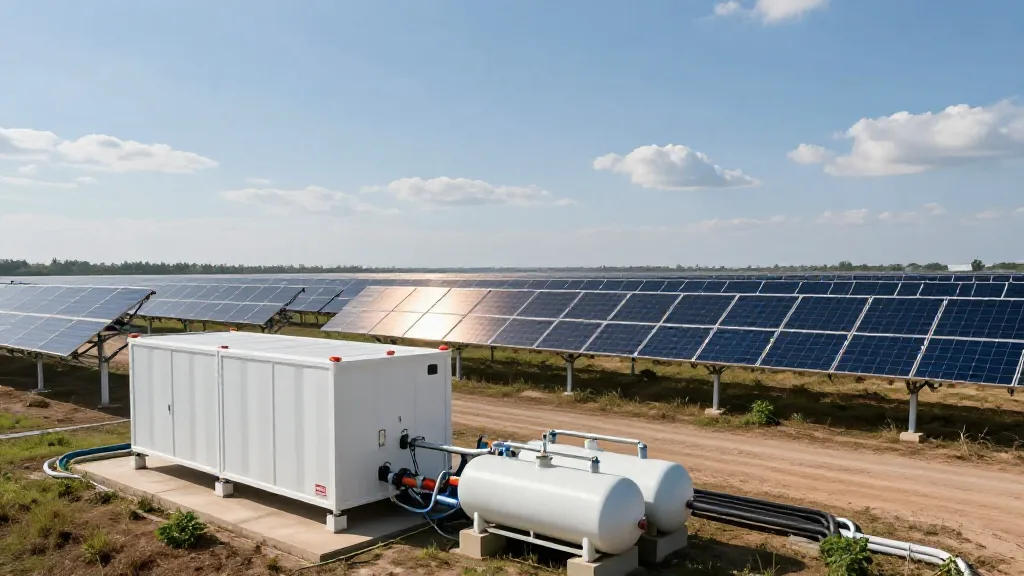
For energy project developers, the strategic implications are clear. The window for locking in long-term power purchase agreements with renewable assets is narrowing as competition for low-cost solar and wind intensifies. A 100 MW solar installation paired with a 50 MW electrolyzer can produce roughly 8,000 tonnes of hydrogen annually, based on NREL's performance models for high-irradiation sites.
The economics favor integrated systems—solar generation, battery storage, and electrolysis colocated to maximize capacity factors and minimize grid dependency. This is the design philosophy behind our solar panels and lithium battery storage solutions, which are engineered for high-efficiency DC coupling with electrolyzer loads.
The Verdict: Not If, But When
Grey hydrogen's cost advantage is eroding from multiple directions simultaneously: falling renewable electricity prices, declining electrolyzer costs, carbon pricing mechanisms, and policy subsidies that directly target the green premium. The IEA's analysis suggests that the global weighted average cost of green hydrogen will fall below grey hydrogen by 2030 in most markets, and earlier in regions with exceptional solar resources and supportive policy frameworks.
The transition is not without friction. Electrolyzer supply chains remain concentrated in a few countries. Hydrogen storage technology needs further development. Grid infrastructure must accommodate new loads. But the direction of travel is unambiguous.
For industrial buyers currently locked into grey hydrogen supply contracts, the prudent strategy is to monitor the cost curves closely and structure contracts with flexibility. For project developers, the opportunity lies in building integrated renewable-plus-electrolysis systems now, positioning for the demand surge that policy mandates will create.
The question is no longer whether green hydrogen will replace grey hydrogen. The question is which regions, which project structures, and which technology configurations will capture the value first. The engineering and economic fundamentals now favor the green path.
To discuss how integrated solar and storage systems can support your hydrogen production goals, contact our engineering team.